
Legal faq
POCSO Lawyer in Noida
POCSO lawyer in Noida for bail, trial and appeals. Advocate Mayank Sharma explains how POCSO cases work and what families should do. +91 92209 15520.
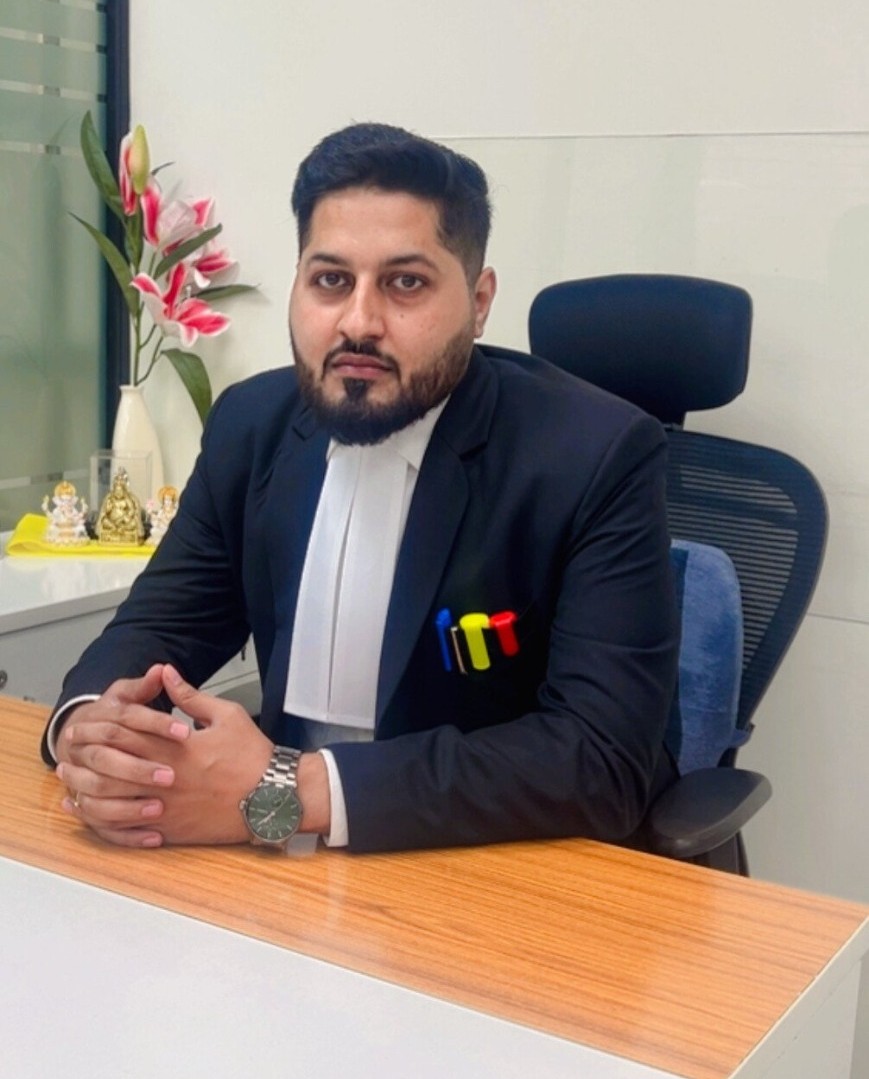
POCSO Lawyer in Noida
A call from the police station. A son, a brother or a husband named in a complaint under the Protection of Children from Sexual Offences Act, 2012. Families tell us the first night is the hardest. We understand. As a POCSO lawyer in Noida, the Chamber of Mayank Sharma represents people accused in POCSO cases, and we do it within the strict rules the law sets to protect the child.
The POCSO Act is serious law. It exists to protect children, and courts apply it firmly. A person accused under it still has the right to a fair investigation, a fair trial and a proper defence. Both things are true. Our work sits between them.
When a POCSO Case Is Registered Against Someone in Your Family
Things usually move fast after the FIR. The police record the child's statement, arrange a medical examination and often make an arrest within days. The child's statement may also be recorded before a magistrate under Section 183 of the BNSS. Families often hear about each step only afterwards. That's frightening.
Here's what we ask families to do straight away:
- Get a copy of the FIR, or at least the FIR number and police station.
- Collect documents that show the dates and places involved, such as school or office attendance, travel tickets or CCTV records.
- Save phone records and messages. Don't delete anything.
- Don't contact the child, the child's family or any witness.
- Don't post anything about the case online.
If an arrest hasn't happened yet, the question of pre-arrest protection comes first. If it has, the focus moves to regular bail. We'll tell you which applies. The facts decide.
If your family member is already in custody, he'll usually be produced before a court within 24 hours of arrest. After that, he may be sent to judicial custody at the district jail. Visiting rules apply. We'll explain how to meet him and what to take.
How the POCSO Act Works in Practice
POCSO cases don't run like ordinary criminal trials. The law builds in special steps to protect the child. Knowing them helps you understand what you'll see in court.
- Special Courts. POCSO cases are tried by Special Courts under Section 28 of the Act. In Gautam Buddh Nagar, they sit at the district court complex in Surajpur, Greater Noida.
- Child-friendly statements. The police record the child's statement, as far as possible, at a place of the child's choosing and through a woman officer.
- Trial in camera. The trial is held in private, under Section 37 of the Act. The public and media can't attend.
- Identity protection. No one may reveal the child's name, school, address or photograph. Section 23 makes this an offence.
- Questions through the court. During cross-examination, questions to the child are usually put through the judge.
- Time limits. The Act asks for the child's evidence within 30 days and the trial within one year, as far as possible, under Section 35.
In practice, trials often take longer. Still, these rules shape every hearing. We plan around them.
Bail in POCSO Cases: What Courts Look At
Bail in POCSO cases is harder than in many other cases. Courts are careful, and they should be. That doesn't mean bail is impossible. It means the application has to be precise.
Timing matters too. A bail application filed before the child's evidence is recorded faces different questions from one filed after. Courts often worry most about pressure on the child in the early stage. Later, the length of custody carries more weight. We choose the moment carefully.
Courts usually weigh:
- The exact allegation and the section applied
- The age of the child and how it's been proved
- What the medical report says, and what it doesn't
- Consistency between the FIR and later statements
- The relationship between the accused and the child's family
- Any risk of the accused influencing the child or witnesses
- How long the accused has already spent in custody
- How far the trial has progressed
The child's guardian may also be given notice of the bail hearing. As a POCSO bail lawyer in Noida, we prepare for that. Certain offences under the BNS also limit anticipatory bail under Section 482(4) of the BNSS. We'll check that at the start.
Issues That Often Come Up
Some questions appear again and again in POCSO matters. None of them decides a case by itself. But each can matter a great deal.
Age of the child
The law needs proof that the child was under 18. Courts usually look first at school certificates, then at a birth certificate from a municipal body, and only then at a medical age test, following Section 94 of the Juvenile Justice Act, 2015. Errors in age records do happen. We check them.
Relationships between teenagers
Under POCSO, a person under 18 can't legally consent. Many cases involve two young people of similar age. Courts have taken note of such facts at the bail stage in some matters. The law itself hasn't changed, though. We'll explain plainly where you stand.
Allegations during family or property disputes
Sometimes a complaint is filed while a divorce, custody or property dispute is running. Courts examine the timing and the background. We place the full history on record, carefully and respectfully.
Medical evidence
The medical report is often central. Sometimes it supports the allegation. Sometimes it's silent or doesn't match the timeline in the FIR. A report that finds nothing doesn't end the case by itself, because many offences under the Act leave no physical sign. We read it with that in mind. Careful, not hopeful.
Electronic evidence
Many POCSO cases now involve phones: messages, photos, call records or social media chats. Such records need to be collected and proved properly under the Bharatiya Sakshya Adhiniyam, 2023. Gaps in how a phone was seized or examined can matter at trial. We check the seizure memo and the forensic report.
Long trials
Delays are common. A long trial is hard on everyone, including the child. We push for steady progress and for bail where the delay justifies it.
If the accused has spent a long time in custody and the trial hasn't moved, that fact can support a fresh bail application. Courts take long custody seriously. We track the dates so the point is made with figures, not just words.
Our Approach as a POCSO Lawyer in Noida
We start with the papers: the FIR, the child's statements, the medical report, the age records and the chargesheet. We look for gaps and contradictions. Then we plan the defence around facts, not feelings.
In court, we cross-examine with care. The questions are put through the judge where the law requires it. Our conduct stays respectful toward the child at every stage. That's the law, and it's also right.
As a POCSO case lawyer in Noida, we never contact the child or the child's family. If anyone suggests a private "settlement", tell us at once. We also explain each step to the family in plain words. You'll know what the next date is for, who will be examined and what the court may decide. Fear grows when people don't know what's coming. Clear information helps.
Many families first approach a law firm in Noida for general advice and only later realise how specific POCSO rules are. You'll get clear answers from us early.
Cases We Handle
Our POCSO work as a POCSO advocate in Noida covers:
- Anticipatory bail where the law permits it
- Regular bail before the Special Court and the High Court
- Default bail if the chargesheet isn't filed in time
- Interim bail on medical or urgent family grounds
- Bail after conviction, pending appeal
- Trial defence before the Special Court
- Appeals and revisions
- POCSO cases combined with BNS sexual offence sections (earlier IPC Sections 375 and 376)
- POCSO cases linked to cybercrime under the IT Act
- POCSO cases combined with trafficking, NDPS or SC/ST Act charges
- POCSO cases with economic, political or abuse-of-authority angles
- Contempt matters arising during POCSO trials
If the case has an online element, read our cyber crime lawyer in Noida page too. For pre-arrest protection, see our anticipatory bail lawyer in Noida page. Our defense lawyer in Noida page covers criminal trials more widely.
Rules You Must Follow While the Case Is Pending
What the family does after the FIR can affect bail and the trial. Small mistakes become big problems. Please follow these rules.
- Never name or identify the child anywhere, including family WhatsApp groups. It's an offence under Section 23 of the Act.
- Don't approach the child's family, even to apologise or explain.
- Attend each court date, on time, with ID.
- Follow every bail condition exactly.
- Keep copies of all orders and notices in one file.
If you're unsure about something, ask us before you act. A short call can prevent a serious mistake.
Families also go through a lot themselves. Relatives may stop visiting. Neighbours may talk. Try to keep daily life as steady as you can, especially for any other children at home. Lean on people you trust, and leave the legal side to us.
Frequently Asked Questions
Q1. Can a POCSO lawyer in Noida seek anticipatory bail?
Sometimes. It depends on the sections applied. Certain offences under the BNS bar anticipatory bail under Section 482(4) of the BNSS. We check this the day you contact us.
Q2. Can a POCSO case be settled or withdrawn?
No. POCSO offences can't be compromised between the families. Courts have generally refused to quash POCSO cases on the basis of a settlement.
Q3. How is the child's age decided?
Through documents first. School records come first, then a birth certificate from a municipal body, and a medical age test only if those aren't available.
Q4. What is the presumption under the POCSO Act?
Under Sections 29 and 30 of the Act, the court presumes certain facts against the accused once the prosecution proves the basic facts. The defence then has to rebut that presumption. It makes careful preparation even more important.
Q5. Can a case be filed over a consensual teenage relationship?
Yes. The law treats a person under 18 as unable to consent. Courts have, in some bail matters, taken the closeness in age and the facts into account. We'll explain how this applies to you.
Q6. Where are POCSO cases tried in Gautam Buddh Nagar?
At the Special POCSO Courts in the district court complex at Surajpur, Greater Noida. Appeals and some bail matters go to the Allahabad High Court.
Q7. Can our family contact the complainant's family?
No. Any contact can be seen as pressure or tampering. It can lead to bail being refused or cancelled. Let all communication happen through the court.
Q8. What happens if a complaint turns out to be false?
Section 22 of the Act punishes false complaints made to harm someone, though not when a child makes the complaint. Such a finding needs proof. We don't assume it.
Q9. How long does a POCSO trial take?
The Act aims for one year, as far as possible. Many trials take longer in practice. We'll give you a realistic sense once the chargesheet is filed.
Q10. How do I choose the best POCSO defence lawyer in Noida?
Look for someone who knows the Special Court's procedure, reads the medical and age records closely, and respects the child's protections. Ask how they'll keep you informed. Avoid anyone who suggests contacting the child's family. That advice can make things far worse.
Talk to Us
You don't have to work out the next step alone. Call or message us, and we'll go through the FIR with you in confidence. You can also reach us through our contact page, or visit the Chamber of Mayank Sharma homepage.
Phone: +91 92209 15520
WhatsApp: +91 92209 15520
Email: chamber.mayank@gmail.com
Address: LGF-058, Ansal Fortune Arcade, K Block, Sector 18, Noida 201301
This page is for general information and is not legal advice.