Legal faq
Motor Accident Claim Lawyer in Noida
Motor accident claim lawyer in Noida for MACT claims, insurance disputes, death and injury compensation and appeals. Call +91 92209 15520.
Motor Accident Claim Lawyer in Noida
A road accident changes a family's life in a moment. There are hospital bills, missed work, police formalities and, sometimes, the loss of someone you love. Thinking about a legal claim can feel like too much. We understand. As a motor accident claim lawyer in Noida, Chamber of Mayank Sharma helps accident victims and their families claim compensation before the Motor Accident Claims Tribunal (MACT).
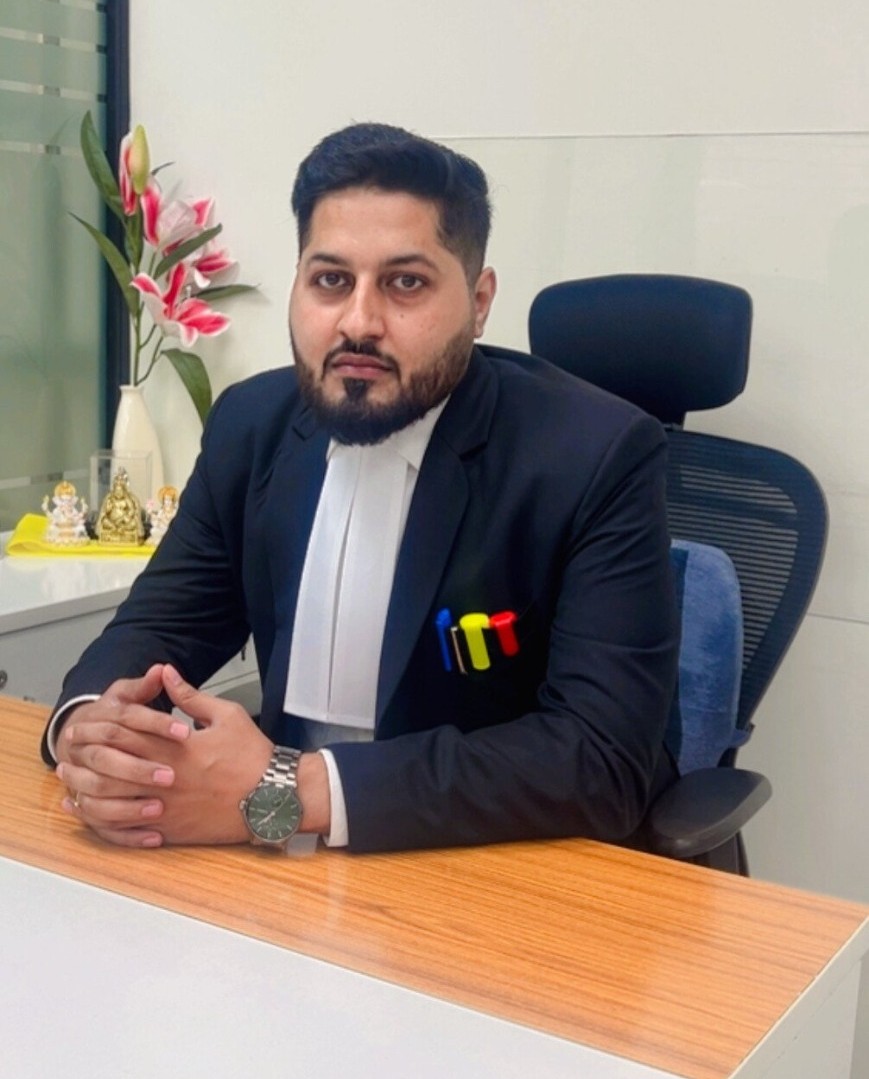
Advocate Mayank Sharma handles motor accident claims from our office in Sector 18, Noida, for families in Noida, Greater Noida, Delhi and Gurugram. We help with filing claims, hearings before the tribunal, dealing with insurance companies and appeals. You focus on recovery. We'll handle the paperwork.
We also understand that money is tight after an accident. Hospital bills don't wait. We'll explain the costs of the claim honestly at the first meeting, so there are no surprises later.
After a Road Accident: First Steps for Victims and Families
The first days after an accident are confusing. Medical care comes first, always. But a few simple steps in that period can make a later claim much stronger. Here's what helps.
- Get medical treatment and keep every record. Admission papers, discharge summaries, prescriptions and bills.
- Make sure the police are informed. An FIR or a police report is the backbone of most claims.
- Note the vehicle number. Photos of the vehicle, the scene and any injuries help a lot.
- Collect witness details. Names and phone numbers of people who saw the accident.
- Keep proof of income. Salary slips, income tax returns or business records of the injured person or the person who died.
- Don't sign anything from an insurer or the other driver before taking advice.
The police also send an accident report to the tribunal in many cases. Even so, it's wise to have a lawyer check that the claim is complete and filed properly. Delays can hurt. Act early.
If the injured person can't work for some time, keep a simple diary of missed workdays, follow-up visits and the help needed at home. Tribunals rely on records, not memory. A notebook and a folder of bills go a long way.
There may be a criminal case against the driver as well, for causing death or hurt by rash or negligent driving under the Bharatiya Nyaya Sanhita. That's separate from the compensation claim. We can guide you on both.
What Compensation Can Cover
Compensation in motor accident cases is meant to put the family back, as far as money can, in the position it would have been in. Tribunals look at both financial loss and non-financial loss.
In injury cases
- Medical expenses, past and future
- Loss of income during treatment and recovery
- Loss of future earning capacity due to permanent disability
- Cost of attendants and special diet
- Transport to and from hospital
- Pain and suffering
- Loss of amenities, such as the ability to work, walk or enjoy life as before
In death cases
- Loss of dependency, which is the income the family lost
- Funeral expenses
- Loss of estate
- Loss of consortium for the spouse, children and parents
For death and permanent disability, tribunals commonly use a multiplier method. They take the person's income, add an amount for future prospects, deduct personal expenses, and multiply by a figure based on age. The details are technical. Proof of income is the most important input. Without it, tribunals often fall back on notional income.
Filing a Claim Before the Tribunal
A claim is filed under Section 166 of the Motor Vehicles Act, 1988. The injured person, the legal heirs of a person who died, or the owner of damaged property can file it. An authorised agent can also file on behalf of the injured person or the heirs.
You can file before the tribunal that has jurisdiction where:
- The accident took place, or
- The claimant lives or carries on business, or
- The defendant lives
That choice helps families. If you live in Noida but the accident happened on a highway elsewhere, you can usually file in Gautam Buddh Nagar. For Noida, the claims tribunal sits at the district court complex in Surajpur, Greater Noida. Delhi has its own tribunals.
Documents usually needed include:
- FIR or police report and the chargesheet if filed
- Medical records and bills
- Disability certificate, where relevant
- Post-mortem report and death certificate in fatal cases
- Proof of age and income of the injured or deceased
- Details of the vehicle, its owner, driver and insurer
- ID and relationship proof of the claimants
There's also a no-fault liability route under Section 164 of the Act, where compensation of Rs 5 lakh in death cases and Rs 2.5 lakh in cases of grievous hurt is payable without proving negligence. It's a fixed amount. A full claim under Section 166 often gives more, but needs proof. We'll explain which route suits you.
Dealing With the Insurance Company
In most cases, the insurer of the vehicle at fault pays the compensation. Third-party insurance is compulsory for every motor vehicle in India. But insurers often contest claims.
Common defences raised by insurers include:
- The driver didn't hold a valid licence
- The vehicle was used against the terms of the policy
- The claimant's own negligence contributed to the accident
- The income claimed is exaggerated
- The disability is less than stated
Some of these defenses can reduce or shift liability. Others don't affect the victim's right to be paid, even if the insurer later recovers from the owner. We answer each defence with evidence. Insurers respond to well-documented claims.
Insurers sometimes offer a settlement directly. Before accepting, check how it compares with what the tribunal is likely to award. A quick offer isn't always a fair one. We negotiate with insurance companies on your behalf when settlement makes sense, including at Lok Adalats.
How a Motor Accident Claim Lawyer in Noida Builds Your Case
A strong claim rests on three things: negligence, injury or loss, and income. Here's how we approach each one.
Proving negligence
We use the FIR, the site plan, witness statements and photographs to show that the other driver was at fault. The standard in claims cases is lower than in a criminal trial. A preponderance of probability is enough.
Proving the injury or loss
We gather the medical file, get a disability assessment where needed and, in death cases, organise the post-mortem and dependency evidence. Missing bills can sometimes be reconstructed from hospital records.
Showing the impact on daily life
Numbers aren't everything. A tribunal also considers how the injury has changed the person's life: the job they can no longer do, the hobbies they've lost, the help they now need at home. We bring that out through simple, honest evidence. Families often underplay it.
Proving income
We collect salary slips, tax returns, bank statements and business records. For self-employed people and farmers, this needs more work. We put in that work. As a MACT case advocate in Noida, we also prepare the family's witnesses. Tribunals hear many cases. Clear, honest testimony helps yours stand out.
Many families approach a law firm in Noida only after an insurer has already made a low offer. That's fine. It's rarely too late to review it. As a road accident claim lawyer in Noida, we take on cases involving cars, two-wheelers, trucks, buses and commercial vehicles, and both injury and death claims.
Hit-and-Run and Uninsured Vehicles
Sometimes the driver flees and the vehicle is never traced. Families assume nothing can be done. That's not true. Under Section 161 of the Motor Vehicles Act, the government's scheme for hit-and-run cases pays Rs 2 lakh for death and Rs 50,000 for grievous hurt. The application goes through the claims enquiry officer, usually the sub-divisional magistrate.
It's a fixed amount, but it helps. If the vehicle is traced but uninsured, the claim lies against the owner and driver. Recovery can be harder. We look at the owner's assets and other options before you decide how to proceed.
Appeals Against an Award
If the award is too low, or if you're an owner or insurer who thinks it's wrong, an appeal lies to the High Court under Section 173 of the Act. It must generally be filed within 90 days of the award. The High Court can allow a later appeal if there's sufficient cause.
An insurer or owner who appeals must usually deposit Rs 25,000 or 50 per cent of the award, whichever is less. Claimants don't face that deposit. For Noida awards, appeals go to the Allahabad High Court. For Delhi awards, it's the Delhi High Court.
Once an award is passed, the insurer is usually directed to deposit the amount in the tribunal within a set time. Tribunals often keep part of the money in fixed deposits, especially for minors and widows, and release it in stages. We help with the release applications.
We read the award with you and give an honest view of whether an appeal is worth it. Many families accept a fair award and move on. Some shouldn't.
If the accident has also led to a criminal case and you need help there, see our defense lawyer in Noida page. For unpaid sums after an award or a settlement, our money recovery lawyer in Noida page explains recovery routes.
Frequently Asked Questions
Q1. Who can file a motor accident claim?
The injured person, the legal heirs of a person who died, the owner of damaged property, or an authorized agent of any of them. In death cases, all legal heirs should be part of the claim.
Q2. Where can I file the claim?
Before the tribunal where the accident happened, where you live or do business, or where the defendant lives. For Noida residents, that's usually the tribunal at the Surajpur district court complex.
Q3. Is there a time limit to file?
Yes. File as early as you can. The law now places time limits on claims, and delay often makes evidence harder to collect. Bring us the papers soon after the accident.
Q4. How is compensation calculated?
Usually by looking at income, future prospects, age and dependants, along with medical costs and non-financial losses. In death and permanent disability cases, tribunals generally use a multiplier method.
Q5. Can I claim if a family member died in the accident?
Yes. Legal heirs can claim loss of dependency, funeral expenses, loss of estate and loss of consortium. Proof of the deceased's income is very important.
Q6. What if the vehicle was uninsured or not traced?
For an untraced vehicle, the hit-and-run scheme under Section 161 pays fixed compensation. For an uninsured vehicle, the claim lies against the owner and driver.
Q7. Do I need the police FIR for a claim?
Yes, in practice. The FIR and police report are the main proof of the accident. If the police haven't registered one, we can help you take the right steps, including a written complaint to senior officers.
Q8. Can the insurance company settle without going to court?
Yes. Insurers sometimes settle directly or at a Lok Adalat. Check any offer carefully before you accept it, because a settlement usually ends the claim.
Q9. How do I appeal an award?
File an appeal before the High Court under Section 173 within 90 days of the award. An accident compensation lawyer in Noida can tell you if your case justifies it.
Q10. What does a motor accident lawyer in Noida charge?
It depends on the case and the work involved. We discuss fees openly at the first meeting, before any work begins. A MACT lawyer in Noida should never ask you to sign blank papers or hand over the award cheque.
Talk to Us
If you or someone in your family has been hurt in a road accident, call us when you're ready. We'll explain the claim process and what we need. You can also reach us through the contact page or visit the Chamber of Mayank Sharma homepage.
Phone: +91 92209 15520
WhatsApp: +91 92209 15520
Email: chamber.mayank@gmail.com
Address: LGF-058, Ansal Fortune Arcade, K Block, Sector 18, Noida 201301
This page is for general information and is not legal advice.